 THE UNIVERSITY OF CHICAGO


SSD Welcomes 4 New Faculty for the 2025-26 Academic Year
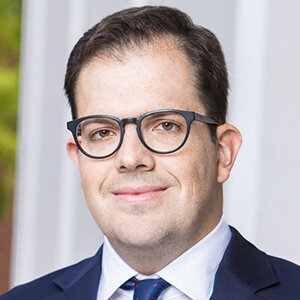
Juanma Castro-Vincenzi
Assistant Professor, Kenneth C. Griffin Department of Economics
Juanma Castro-Vincenzi’s research interests lie in international trade, macroeconomics, and environmental economics. Methodologically, Castro-Vincenzi studies how firms make location, production, investment, and sales decisions in global markets, and the implications of these decisions for policy and welfare. He joins the university faculty after serving as a Saieh Fellow at the Becker Friedman Institute for Economics, and as a Michael Chae Postdoctoral Fellow in the Department of Economics at Harvard University. Castro-Vincenzi earned his PhD in Economics from Princeton University in 2023, MA in Economics and Finance from Centro de Estudios Monetarios y Financieros (CEMFI), and his BA from Universidad de Costa Rica.
What is one significant research question you hope to advance this year?
One research question I hope to advance this year is how demand and production risk shape the configuration of global supply chains.
What can students look forward to in their interactions with you?
Rigor and enthusiasm in using economics to better understand the world.
Describe one object you have in your office that helps you in your work.
A Costa Rican coffee chorreador, a traditional manual coffee-brewing device from my home country. I brew fresh coffee during the day and take a short break to refocus.
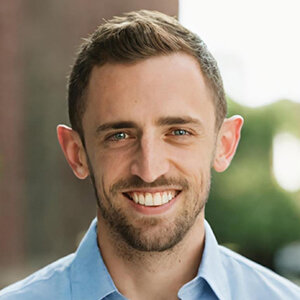
Isaac D. Mehlhaff
Neubauer Family Assistant Professor, Department of Political Science
Isaac Mehlhaff’s research is driven by questions in public opinion and political psychology: How and why do citizens change their attitudes on political issues? Under what conditions can political discussion exacerbate or ameliorate mass polarization? How is polarization causally related to other features of government and society? As a computational social scientist, he answers these questions by using and developing rigorous methods in natural language processing, machine learning, and Bayesian methods, with a particular focus on high-quality measurement.
Mehlhaff earned his PhD in 2023 from The University of North Carolina at Chapel Hill. He was previously a postdoctoral scholar in the Data Science Institute at the University of Chicago, and he returns to Chicago after serving on the faculty of Texas A&M University. His work has been funded by the National Science Foundation and American Political Science Association, among others, and published in venues such as the American Political Science Review and American Journal of Political Science.
What is one significant research question you hope to advance this year?
I have an ongoing project seeking to understand how citizens change their opinions through interpersonal conversation, and the types of conversations most likely to elicit persuasion. Experimental evidence from human subjects is the “gold standard” for these types of questions, but I’m just as excited about developing machine learning methods to extract information about persuasion, emotion, and conversation from unstructured text and audio data.
What can students look forward to in their interactions with you?
My goal in education is to develop students who can critique and contribute to political society. Whether at the undergraduate or graduate level, this involves questioning assumptions, learning how to function as an autonomous researcher, and communicating productively across lines of disagreement. My teaching and mentorship aims to nurture those skills.
If you could invite three specialists in your field (living or otherwise) to dinner, who would you choose—and what would you take about?
Benedict Anderson, Herbert Gintis, and Hugo Mercier all wrote books that changed the way I think about some aspect of the world. I would love to hear their thoughts about how people form attitudes toward politics, how those attitudes change, and how they interact with group identities.

Jeremy Simmons
Assistant Professor, Department of History
Jeremy Simmons investigates the wider ancient world—what Greco-Roman geographers thought of as the oikoumene, which spanned roughly from Iberia to India. Accordingly, he focuses not only on the texts and material culture of the Greek and Roman world, but also those of the ancient Near East and Indian subcontinent.
His current research addresses long-distance maritime commerce in the western Indian Ocean during the early centuries of the Common Era. His forthcoming monograph, Sea of Treasures: A Cultural History of Ancient Indian Ocean Trade (Princeton University Press), focuses on the consumption of goods traded across the Indian Ocean in antiquity, addressing representative Mediterranean and Indian commodities in their new social and cultural contexts. His upcoming research projects continue in material historical directions, particularly the broader frameworks of oceanic history. He regularly teaches courses on Afro-Eurasian connectivity and comparative approaches to ancient conceptions of the world.
Simmons earned his Ph.D. in Classical Studies at Columbia University and his B.A. in Classics and Near Eastern Studies at the University of California, Berkeley. Before coming to Chicago, he was a visiting assistant professor at the Institute for the Study of the Ancient World (New York University) and then Assistant Professor of History at the University of Maryland, College Park. He has held several residential fellowships, including at the American Academy in Rome (FAAR ’20), Harvard University’s Center for Hellenic Studies in Washington, DC (2023) and the Institute for Advanced Study in Princeton (2024).
What is one significant research question you hope to advance this year?
One thing I'm hoping to do is define effective parameters for the pursuit of a "global antiquity." The word "global" can mean whatever you want it to mean: connective or comparative; inclusive or exploitative; hemispheric or planetary. Since more and more scholars deploy these divergent historical frameworks using the same label, I think some clarity is warranted!
What can students look forward to in their interactions with you?
We'll explore a weird and wonderful ancient world, discussing both texts and objects but never losing sight of the human beings they represent. I also can't help but make Star Wars references.
Describe one object you have in your office that helps you in your work.
I have a jar of Indian long pepper (Piper longum L.), which was an important item of ancient long-distance trade alongside the more familiar black peppercorns from Malabar (Piper nigrum L.). Ancient writers in the Mediterranean often confused the two, thinking they were different stages of the same plant species, calling them both "pepper" (Indic sources certainly know the difference between pippali and marica). It reminds me of the conflations and fantasies emerging from objects in motion.

Christopher Walters
Professor, Kenneth C. Griffin Department of Economics
Christopher Walters’ research and teaching covers topics in labor economics, applied econometrics, and the economics of education. His current work includes projects on school choice, school effectiveness, and early childhood interventions. He is a faculty research fellow at the National Bureau of Economic Research and a co-editor of the Journal of Political Economy.
Walters previously served as a Professor at the University of California, Berkeley. He earned his PhD in Economics at MIT in 2013 and BA from the University of Virginia.
What is one significant research question you hope to advance this year?
Much of my work focuses on school effectiveness in US K-12 school districts. In this area, I'm hoping to complete a project that contrasts the potential effects of re-allocative policies (changes to admission criteria and other rules determining school access) with resource augmentation policies (efforts to increase the overall quality of schools). Together with my coauthors, Parag Pathak (MIT) and Atila Abdulkadiroglu (Duke), we hope to make progress on understanding which of these types of policies are more likely to improve student outcomes.
What can students look forward to in their interactions with you?
Students can expect an open door and a willingness to discuss any and all topics of interest to them.
Describe one object you have in your office that helps you in your work.
It's not always in my office, but my guitar helps me decompress and reset my attention whenever I'm stuck on a tough intellectual problem.