 THE UNIVERSITY OF CHICAGO

2022 SSD Diploma and Hooding Ceremony
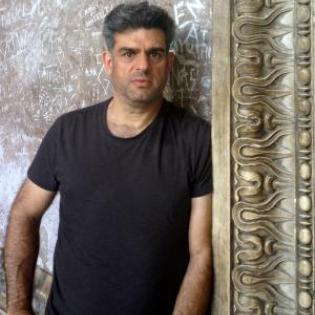
Professor of History and the College; Director, Katz Center for Mexican Studies
Be still. Look inward. Relish this moment before it passes and remember it always. We are gathered here today in ceremonial fashion to mark an auspicious transit in your lives, the successful completion of your graduate studies as scholars and practitioners of the social sciences. On this happy occasion it is my great honor to congratulate all of you, first and foremost the degree recipients, but also your family and friends, because we know well that this is always a collective enterprise, and thus—in one form or another—a collective achievement and celebration.
I am a historian, I research, write, and teach about what came before us. My own scholarship is on the millenarian histories of indigenous farmers in what is now Mexico, with a focus on land tenure, culture, social organization, agricultural ecology and economics, political struggles, social movements, and migrations over the last two centuries. History takes unforeseeable turns, and the descendants of those native corn farmers are now a big part of the population of Chicago and an essential component of our economy. But don’t worry, I am not going to talk about that. Instead, I’ll concentrate on something more general and of direct relevance to you, today. And I promise to be very brief.
As I think about the shape of known human history, no matter how distant, in Mexico or beyond, I keep coming back to William Faulkner’s aphoristic line: “The past is never dead. It’s not even past.” Now, this can mean many different things, all of them worth pondering: that we are made by what came before us, that our contemporary problems and challenges are not in the end as new as we’d like to think, that maybe history does repeat itself, first as tragedy, then as farce (as Marx said), and eventually again, as novelty, or even, in Santayana’s phrase, that “those who cannot remember the past are condemned to repeat it.” One could take this thought in many fruitful directions.
Today I want to pursue a simpler reflection, a lesson from history that is easily grasped but also easily forgotten and all the same clearly consequential. The life trajectories of societies, like those of individuals, are unpredictable and often quite unexpected. Things change all the time, frequently in ways that were not (or could not be) anticipated. We build expectations about the arch of our lives based on assumptions about the stability of social rules and practices, global as well as local, but looking at the past—even just the last two hundred years—shows us that these norms often break apart. I am not referring to vicissitudes of fortune in our individual lives, but rather to disruptive processes of social change, economic upheaval, and political conflict. Just think for a moment: wars of every kind—traditional ones, international or civil, but also covert, irregular, cybernetic, cultural, or religious; epidemics and pandemics; environmental degradation; deep economic crises; routine political struggles, violence, and authoritarian rule, threatened or imposed. Even if we focus only on the recent past—say, since 1900—no human generation has been spared these developments, in the United States or elsewhere. And our present circumstances are no different.
Once upon a time many trusted that the character of modern history was bound to be far more uplifting. Such philosophical optimism was grounded on an ingrained belief in a certain idea of progress, in the notion—born of the Enlightenment—that the spread of reason would give way inevitably to all kinds of social improvement, and thus that human history was at bottom the history of a forward march. The motto of our own University captures this sentiment well: “Let knowledge grow from more to more; and so be human life enriched.” The story of this progressive advancement—of the unstoppable growth of knowledge, technology, and material production—defined for many our self-image; not only did we live better than those who came before us, we also were increasingly better people and better societies, freer from the barbarism, the scarcity, the despotism, and the irrationality of the past. It had to be acknowledged that the unfolding of our enlightenment did not always proceed in a straight line, that there were recurring detours and backslides, but the idea persisted: the course of human history was inexorably a story of progress.
In a narrow sense, some of this was true, at least for some of us: less toil, plenty of material comforts, fast technological advances, higher life expectancy, more effective individual rights, etc.
And yet, as I pointed out a minute ago, the larger objective picture of the present and the recent past is troubling, uncertain, and in some respects worsening. And thus it’s become much harder in recent times to sustain this old faith, to ignore not only the empirical shortcomings of “progress,” but also its conceptual contradictions. Take the overwhelming evidence of global warming, for instance, which pits our modernizing ideal of mass consumption, driven by fossil fuels, against the future of the planet, and ours. Who can believe in the unproblematic march of progress when faced by a combination of global threats of unprecedented scale? We are now forced to reckon with the evidence that progress is neither inexorable nor forthcoming, that it is not our destiny. It may be tempting as a result to slide into disillusionment, disengagement, and paralysis, but I hope instead that we can think together to redefine what progress must mean, and for whom.
And why, you may be thinking, is he telling us this, today? If history is any guide, there are two clear takeaways that may speak to you on this day of your commencement, and in both I find cause for optimism. First, you should anticipate great social change, disruption, even turmoil, the shape of which is by its very nature difficult to foresee. Few lives, individual or societal, manage to follow the course charted for them. You must be adaptable, resourceful, resilient, and creative—that will almost certainly be demanded of you. And I know that you have some of what it takes: as scholars and practitioners of the social sciences trained in one of the best universities in the world, you are all well prepared to meet those challenges. Second, if there is going to be social progress, however we decide to define it, if we aspire to more just societies and economies, truly democratic politics, and a healthier planet that can sustain our lives going forward, it will require from people like you not resignation and conformism but instead dedicated and inspired work that moves us in those directions. You have the skills, the knowledge, the perspective, and I hope also the courage needed to make change meaningful and fulfilling. Even on a small scale, history is what you make, consciously, together with others.
Allow me, in closing, to highlight by way of example one contemporary challenge of great social significance that calls out for your resolute intervention as distinguished scholars and practitioners of the social sciences. In recent times the pernicious idea that truth is in the end a matter of shifting political convenience has gained ascendance, nationally and internationally. These so-called “post-truth” discourses trust that persistent intimidation and propaganda can effectively replace evidence as the basis for our public judgements, thereby corrupting and subverting institutional and democratic processes. The soul of the social sciences is at the core of this consequential confrontation, the outcome of which will define our times. Truth is almost never a simple matter, and it is not uncommon among us to disagree about it, but our training is firmly rooted in the idea that the analysis of evidence is the wellspring of reason. Our methodologies vary and our conclusions are often the subject of vigorous debate, but whether we practice archival, historical, ethnographic, econometric, GIS, spatial, statistical, psychological, or data analysis research, we share the same foundation: an abiding commitment to the value of evidence-based arguments. At stake now is nothing less than the future of our political communities. Let us then use our knowledge to wage this good fight. Beating back this virulent onslaught of unreason—that would certainly be a sign of progress.
On behalf of my faculty colleagues, felicitations. We are proud of your achievements and confident that you will make a difference, in academia and out in the world. Thank you, and Godspeed.