 THE UNIVERSITY OF CHICAGO


Scholars in Residence
2026-27 Graduate Student Fellows

Peyton Cunningham
she/her
Sociology; CSGS-CSRPC Joint Residential Fellow
Peyton Cunningham is a PhD student in the Department of Sociology. She is an Institute for Education Sciences fellow with the Committee of Education. Broadly, her work engages theories of prejudice reduction, education, stratification, and identity-based preferences. Her research examines how intergroup contact and institutional structures shape bias and social preferences in educational settings. Her dissertation investigates the role of assigned college roommates in shaping students’ attitudes toward race, class, and sexuality, using original conjoint experiments, longitudinal survey data, and in-depth interviews. She holds a BA in Sociology from Princeton University and an MA in Social Sciences from the University of Chicago.
 So Yoon Lee
she/her
Sociology; Residential Fellow
So Yoon Lee is a Ph.D. candidate in the Department of Sociology. Her dissertation, “K-pop as a Vocation: Gender, Aspiration, and Cultural Work in South Korea’s Popular Music Industry,” examines how the K-pop industry develops, reproduces, and maintains its workforce. By drawing on ethnographic observations and in-depth interviews with aspirants, educators, and practitioners, she analyzes the rise and operation of the educational ecosystem surrounding K-pop industry careers in production and management. Specifically, she focuses on why this ecosystem attracts mostly young female aspirants in their 20s and 30s, teasing out the contradictory role of fandom as both an asset and liability in their professionalization and search for fulfilling work. Broadly interested in the intersection of culture and politics, So Yoon’s work also examines how gender relations structure women’ participation in pop culture fandom and political mobilization, attending to the shared affective and organizational repertoires between the two.
 Hugo Ljungbäck
he/they
Cinema and Media Studies; Residential Fellow
Hugo Ljungbäck is a Swedish filmmaker, artist, curator, and scholar. His award-winning films explore queer history, representation, identity, and sexuality through an autobiographical lens. They have screened at festivals, galleries, and museums internationally and are distributed by Vtape and Light Cone. His research focuses on queer cinema, experimental film and video, media archaeology, and archival practice, and has appeared in journals and magazines such as New Review of Film and Television Studies, Found Footage Magazine, The Gay & Lesbian Review, Cinéma & Cie, and Media, War & Conflict, as well as in the volumes The Archivability of Television and Warscapes. He is also co-editor of a special issue of Synoptique on media-archival pedagogy and currently co-editing two issues of The Moving Image on small gauge, amateur, and nontheatrical film. He is a PhD candidate in Cinema and Media Studies at the University of Chicago, where he is developing a dissertation on gay men’s amateur filmmaking between 1930 and 1970, an almost wholly overlooked chapter of the history of queer cinema. He also serves as co-chair of the Association of Moving Image Archivists Small Gauge and Amateur Film Committee and as board member of the Center for Home Movies and of Domitor, the International Society for the Study of Early Cinema.
 Le Vi Pham
she/her/hers
History; Residential Fellow
Le Vi Pham is a PhD candidate in the Department of History. She studies gender and labor in the Japanese empire, with a focus on colonial Korea. Her dissertation examines Japanese women working in the sex trade and entertainment and service industry on the Korean peninsula from the opening of the ports in 1876 to the end of the Japanese occupation in 1945, interrogating how the regulation of female bodies and intimate life is intertwined with the empire’s larger geopolitical strategies, with lasting impacts that continue to shape Japan-Korea relations today.
 Neomi Rao
she/they
Political Science; CSGS-CSRPC Joint Dissertation Fellow
Neomi Rao is a PhD Candidate in the Department of Political Science at the University of Chicago, focusing on American politics, social movements, Black feminism, and carceral studies.
Through community-engaged scholarship, her research investigates how radical movement organizers translate world-making ambitions into accessible pathways for political change. Her dissertation project, Carceral Racial Capitalism and the Radical Politics of Abolitionist Organizing in Post-Industrial Chicago, maps the lineages, emergence, and specific ideological and strategic interventions of the contemporary abolitionist movement ecosystem in Chicago through interviews, archival work, media analysis, and participant observation.
Personal Website: neomi-rao.github.io

Anne Ruelle
she/her
Crown Family School of Social Work, Policy, and Practice; Residential Fellow
Anne Ruelle is a PhD candidate in Social Work, Policy, and Practice. Her research aims to better understand the lived experiences of people affected by community and state violence through a gendered lens. Her dissertation, “‘Now only good people live free’: Insecurity, Gender, and Care,” focuses on the impact of El Salvador's State of Exception on the family members of people incarcerated under an emergent dictatorial regime. Through study of the new and displaced daily care practices of these families, she highlights relationships of power between the state and its citizens and interrogate how these affect greater progress towards peaceful societies. Through her scholarship, she strives to build more robust, situated knowledge about gendered experiences of violence and how security responses are experienced in the most affected homes and communities. Her work has been funded by the Fulbright Program and numerous internal grants. She has over 10 years of research and work experience in El Salvador and holds a master's in social work from the University of Chicago and a BA in Global Studies and Spanish from Providence College.
 Sofia J Smith
she/her
Political Science; Residential Fellow
Sofia J Smith is a a scholar of Middle East politics who uses feminist theory and practice to study how gendered and classed relations of authority constitute authoritarian political order. Her dissertation, Performance Anxieties: Celebrity, Citation, and Citizenship in Modern Egypt, examines how struggles over women’s public visibility — anchored in the mass prosecution of Egypt’s so-called “TikTok women” — become a medium through which citizens and regimes asymmetrically co-author authoritarian order. Drawing on twenty-two months of ethnographic fieldwork across politically antagonistic communities on and offline, the project develops the concept of “authoritarian citizenship” to theorize how practices of imitation, citation, gossip, and denunciation of celebrity articulate differentiated forms of political membership.
In 2026-7 she will be a PhD Fellow at the Pozen Family Center for Human Rights and her works has been supported by a Neubauer Fellowship. In Cairo, she was an Affiliated Scholar at the Center for Economic, Legal, and Social Studies and Documentation (CEDEJ) and Netherlands-Flemish Institute (NVIC) and collaborated with with the Cairo Institute for Liberal Arts and Sciences and Tadwein for Gender Studies in Cairo.
 Abigail Taylor-Roth
she/they
Conceptual and Historical Studies of Science; Dissertation Fellow
Abigail Taylor-Roth is a PhD candidate in the Committee on Conceptual and Historical Studies of Science at the University of Chicago studying the history of modern mathematics and feminist science and technology studies. Her dissertation explores how mathematicians relate to state and military projects by following a broad history of fractal geometry and related works across the 20th century, from Britain to the U.S. In this project, they ask, when does mathematization feed into state control and how do mathematicians notice or participate in that process? What does it mean for mathematics work to be of “national importance” and what is at stake in that designation? And, how should we understand the role of female mathematicians in military projects? Attending to how mathematicians, intentionally or unintentionally, position themselves and their work across different political and mathematical landscapes both develops a richer picture of the field of fractal geometry and provides insight into the challenges and possibilities of developing anti-militarist mathematics. They are always thinking and teaching about the role of mathematics and quantification in social movements and are committed to building towards scientific and mathematical knowledge that are not rooted in militarism, extraction, and carceral technologies. She holds a BA in Women’s, Gender, and Sexuality Studies and Mathematics from Colby College.
 Vladislav Zemenkov
he/him/his
Comparative Literature; Residential Fellow
Vladislav Zemenkov is a PhD student in the Department of Comparative Literature. His work spans literary criticism, affect theory, and the study of global modernisms, with a particular interest in the relationship between aesthetic form and revolutionary politics. His dissertation examines tenderness as an affective and aesthetic mode in the twentieth-century European modernism. He traces how modernist experiments with language and form complicated the dominant ideals of revolutionary androcentrism. Vladislav's research asks how changing conceptions of matter and sensation made new forms of artistic production and social relation thinkable.
His broader academic interests include study of modernist masculinities, queer and diasporic imaginaries, revolutionary internationalism, psychoanalysis, and the connections between literature and politics in interwar and post-war Europe. Vlad holds a BA in Cultural Studies and an MA in History from the Higher School of Economics in Moscow, an MA in Polish, Russian, and Central and Eastern European Studies from the University of Illinois Chicago, and an MA in Comparative Literature from the University of Chicago. He is a contributor to the collective volume Mixed Feelings: A Phrasebook for the New Reality, published in Russia in 2021. His writing and public scholarship on the changing linguistic and cultural scripts of love in contemporary Russia have appeared in several Russian cultural and intellectual publications.
Postdoctoral Teaching Fellows and Lecturers

Madeline Adams
she/her/hers
History; Social Sciences Teaching Fellow
Madeline Adams is a historian of queer media and modern Germany. Her first book project, based on her dissertation titled Gray Activism, examines how queer East Germans used media practices to build and sustain social networks, political communities, and collective memory across the 1980s and into the decades following unification. Focusing on print media production, circulation, and preservation, the project shows how these materials functioned as infrastructures of queer life rather than merely records of it.
Her current research focuses on sexuality and leftist politics in imperial Germany. Additionally, she is researching the media ecosystem and legacies of the Chicago-based program LesBiGay Radio (1994-2001). Adams has also worked in public history at the University of Chicago’s Special Collections Research Center and the Wende Museum in Los Angeles.
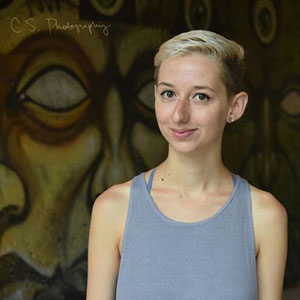 Rhiannon Love Auriemma
she/her/hers
Lecturer in Gender and Sexuality Studies
Rhiannon is a feminist theorist working in the fields of political theory and gender studies. She holds a PhD in Political Science from Northwestern University and an MA in Politics from The New School for Social Research. Her research and teaching focus primarily on intersectionality, feminist politics, critical race theory, and interpretive methods in feminist theory.
Her dissertation, “(Being a) Feminist (is a) Struggle: Intersectional Feminist Politics in the Era of the Women’s March”, focuses on the ways that feminist politics are animated by debates concerning the political demands of intersectionality. The dissertation offers critical interpretations of the work of Kimberlé Crenshaw to trace the development of intersectionality as an analytic with connections to pragmatic uses of civil rights law and juridical understandings of politics. She argues that Crenshaw’s theorization of intersectionality offers us an ambiguous understanding of intersectionality’s politics that leaves open multiple avenues of radical resistance and practices of solidarity. Her current research extends this argument, focusing on Crenshaw’s understanding of racial solidarity in relation to ambivalence. This work attends closely to Crenshaw’s understanding of sexual harassment as a political problem, the relationship between intersectionality and radical feminism, and how Crenshaw’s articulation of sexual marginalization might help us rethink feminist politics in the wake of the #metoo movement.
You can read more about her research at rhiannonlove.squarespace.com

Katrina Roze Myers
she/they
Divinity; Divinity Teaching Fellow
Kat Myers is a Fellow in the Divinity School and the Center for the Study of Gender and Sexuality at the University of Chicago, where she earned her PhD in Religious Ethics in 2025. She researches and teaches at the intersection of environmental ethics and religious ethics, bringing them into conversation with feminist theory, philosophy, human rights law, and environmental studies. Her work explores how ethical theory can be grounded in lived experience and made responsive to pervasive structures of suffering.
Her first book project develops a conceptual framework for addressing the moral and structural consequences of climate displacement. Drawing on Schopenhauer’s ethics of compassion, feminist vulnerability theory, and prefigurative practices of mutual aid, she argues that displacement reveals how law and social isolation are major sources of suffering. The project further explores how legal systems, religious traditions, and grassroots communities, when reoriented by compassion, can become resources for an ethical response. Her broader research examines how metaphysical reflection and moral psychology can inform practices of community-building and mutual aid in contexts of ecological disruption.
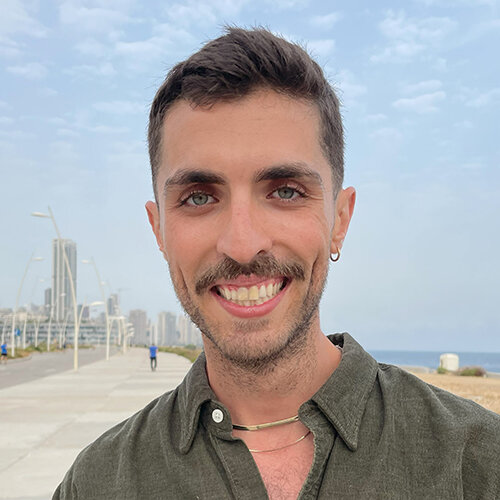
Omar Safadi
he/him/his
Political Science; Social Sciences Teaching Fellow
Omar Safadi is an academic, writer, and researcher and holds a Ph.D., MA, and BA from the University of Chicago’s Department of Political Science. His dissertation and first book project – “The Queer Enemy in the Sectarian Order: Homophobia, Religion, and Stalemate in Lebanon” – draws on more than two years of on-site ethnographic fieldwork that he conducted between 2019 and 2023, a time of social movement protest, fiscal collapse, state breakdown and regional war. It investigates how homophobia blocks democratization and reproduces sectarian rule in the wake of the 2019 Lebanon Revolution. Specializing in the modern Middle East, Omar’s research converges on the inter-disciplinary study of sexuality, geopolitics, civil war, and political transition. He is currently a Social Sciences Teaching Fellow in the Department of Political Science and the Center for the Study of Gender and Sexuality at the University of Chicago.